
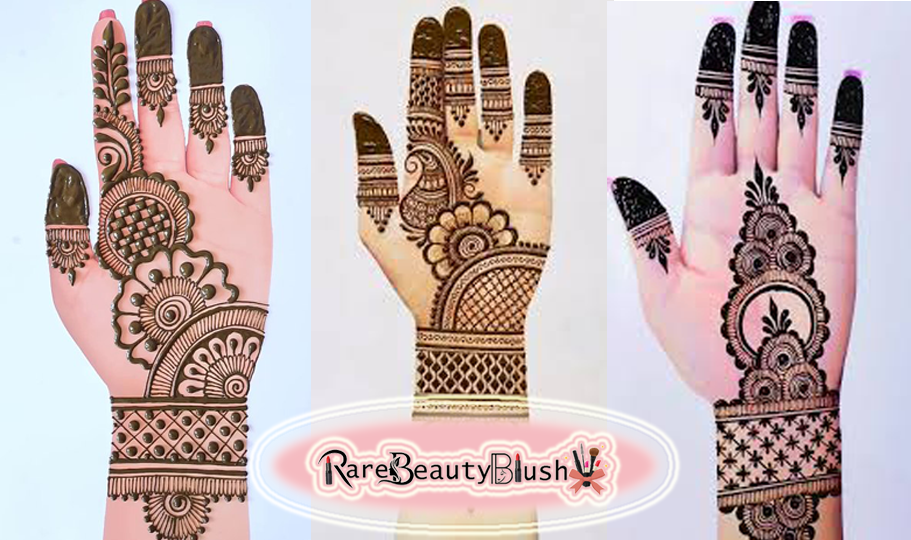
Mehndi, moreover known as henna, has been an indispensable part of South Asian culture for centuries. From weddings and celebrations to casual celebrations, mehndi designs have advanced from conventional, complicated designs to basic, rich themes that anybody can attempt. Simple mehndi designs are picking up notoriety since they are simple to apply, require less time, and see staggering whereas keeping up their social charm. In this article, we will investigate the world of simple mehndi designs, their importance, and tips for making wonderful patterns.
The Social Centrality of Mehndi
Mehndi is more than fair body craftsmanship; it carries profound social and cultural implications. Customarily, it is connected to weddings, celebrations like Eid and Diwali, and other promising events. The application of mehndi is accepted to bring great luck, thriving, and bliss. In numerous societies, the profundity of the henna colour is related to the quality of adore or the bond between family members.
While expanded bridal mehndi designs are popular for their complexity, simple mehndi designs have a charm of their possess. They are flexible, reasonable for both casual and formal occasions, and permit individuals of all ages to appreciate this wonderful convention without the requirement for professional expertise.
Why Select Simple Mehndi Designs?
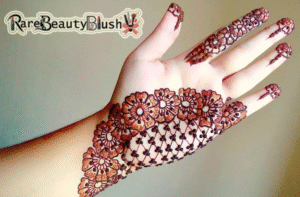
Simple mehndi designs offer a few points of interest over perplexing patterns:
- Time-Efficient: Complex bridal designs can take hours to total, while basic designs can be completed in minutes.
- Beginner-Friendly: Indeed, if you are unused to mehndi, basic designs are less demanding to learn and replicate.
- Elegant See: Moderate designs are inconspicuous,s, er a la mode, making them idealize for present-day tastes.
- Versatile: Basic designs can be worn on hands, feet, or indeed as brief tattoos on other parts of the body.
- Low Upkeep: These designs are less likely to smear and require less aftercare compared to overwhelming, point-by-point patterns.
Basic Components of Simple Mehndi Designs
Simple mehndi designs for kids frequently depend on a few fundamental components that can be combined in different ways to make special designs. Understanding these components is fundamental for making exquisite designs:
- Dots and Lines: The establishment of most mehndi designs, specks and lines can make borders, traces, and shading effects.
- Leaves and Vines: Little leaf designs and winding vines include a common and agile touch.
- Flowers: Botanical themes are ageless and can be scaled down to fit little areas.
- Geometric Shapes: Triangles, squares, circles, and frameworks are utilised for present-day, modern designs.
- Paisleys: This teardrop-shaped theme is a classic image in mehndi and can be streamlined for a negligible look.
By blending and coordinating these components, you can make an assortment of basic, engaging mehndi patterns.
Popular Simple Mehndi Designs for Hands
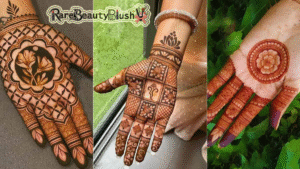
Hands are the most common canvas for mehndi designs. Straightforward hand designs centre on style without overpowering the fingers or palms. Here are a few well-known options:
Moderate Finger Tips
Applying mehndi as it were on the tips of the fingers is a developing slant. This fashion is speedy, slick, and perfect for those who favour downplayed designs. You can make specks, little flower designs, or lines amplifying from the fingertips to the to begin with knuckle.
Single Bloom Motif
A single, little bloom on the back of the hand or close to the wrist is a chic and classy choice. Encompassing the bloom with a few takes off, or dabs, can upgrade the designs while keeping them simple.
Vine and Leaf Patterns
A streaming vine that wraps around the hand or wrist is an unobtrusive yet excellent design. Takes off can be included along the vine, and the designs can expand somewhat up the fingers for a sensitive look.
Geometric Shapes
Modern mehndi partners frequently favour geometric shapes. Triangles, squares, and chevron designs can be organised on the palm or along the fingers for a modern and moderate design.
✔ Want to explore more beauty insights?: Jergens Skin Glow Lotion
Simple Mehndi Designs for Feet
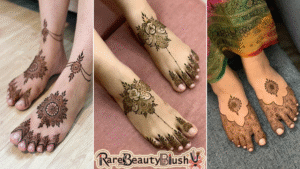
While hand mehndi designs are more common, foot designs are similarly exquisite. Basic designs for feet centre on the toes, lower leg, and upper foot:
Toe Accents
Applying little dabs, lines, or little botanical themes on each toe is basic, however charming. It gives a clean view without covering the whole foot.
Anklet Fashion Mehndi
Designs that take after anklets are exceptionally prevalent. A band of little blossoms, specks, or geometric shapes around the lower leg can mirror the appearance of jewellery.
Centrepiece on Beat of the Foot
A little blossom, mandala, or paisley in the centre of the foot can be combined with negligible lines expanding toward the toes for a refined look.
Step-by-Step Guide to Making Simple Mehndi Designs
Creating your claim straightforward mehndi designs is simple if you follow a few fundamental steps:
- Prepare Your Skin: Wash your hands and feet completely to expel oils and earth. Dry, dry-some time recently applying mehndi.
- Choose Your designs: Choose whether you need botanical, geometric, or vine designs. Begin with a little portrait on paper if needed.
- Fill the Cone Appropriately: Cut the tip of your mehndi cone to control the stream of henna. A better tip works better for nitty-gritty specks and lines.
- Start with Traces: Start by drawing the fundamental diagrams of your designs. For illustration, draw the petals of a blossom or the bend of a vine.
- Add Points of interest: Once the diagrams are done, include littler components like dabs, takes off, or shading to improve the design.
- Let It Dry: Permit the mehndi to dry totally, in a perfect world, for 2–4 hours. The longer it remains, the darker the colour will be.
- Aftercare: Rub off the dried henna instead of washing it. Apply a blend of lemon juice and sugar for way better colour retention.
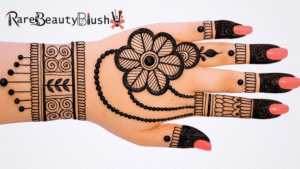
Tips for Making Mehndi Designs: See a Professional
Even besides design can seem proficient if you follow these tips:
- Steady Hand: Hone drawing straight lines and bends to progress precision.
- Symmetry: For designs on both hands or feet, attempt to keep designs adjusted for a slick appearance.
- Consistent Weight: Apply weight indeed on the mehndi cone to dodge thick or lean lines.
- Practice on Paper: Some time recently applying on skin, hone designs on paper or a hone board.
- Keep It Straightforward: Do not pack your designs; moderation regularly looks richer than complicated patterns.
Modern Patterns in Simple Mehndi Designs
Simple mehndi designs are ceaselessly advancing with advanced patterns. A few prevalent patterns include:
- Minimalistic Mandalas: Little mandalas on the palm or wrist include an otherworldly and tasteful appeal.
- Henna Tattoos: Motivated by Western tattoo styles, these are unpretentious and little designs for casual wear.
- Negative Space designs: Taking off parts of the skin uncovered makes differentiate and highlight the pattern.
- Fusion Styles: Combining conventional themes with cutting-edge geometric shapes for an interesting look.
These patterns make mehndi more available to a more youthful group of onlookers and empower inventiveness, whereas regarding social roots.
Conclusion
Simple mehndi designs are culminate for anybody who needs to appreciate the excellence and convention of henna without investing hours on expound designs. They are flexible, rich, and beginner-friendly, making them appropriate for celebrations, weddings, casual occasions, or indeed day-to-day wear. By understanding the essential components of mehndi—dots, lines, takes off, blooms, and geometric shapes—you can make perpetual varieties of basic designs.
Whether you select fragile finger themes, streaming vine designs on your hands, or anklet-style designs for your feet, the charm of basic mehndi lies in its downplayed style. With a small home, anybody can ace these designs and carry forward an ageless convention in a cutting-edge, in vogue way.
Simple mehndi is more than fair body craftsmanship; it is a celebration of culture, excellence, and inventiveness. By grasping moderate designs, you can appreciate the craftsmanship of mehndi without the push of complicated designs while still looking dazzling at any event.